
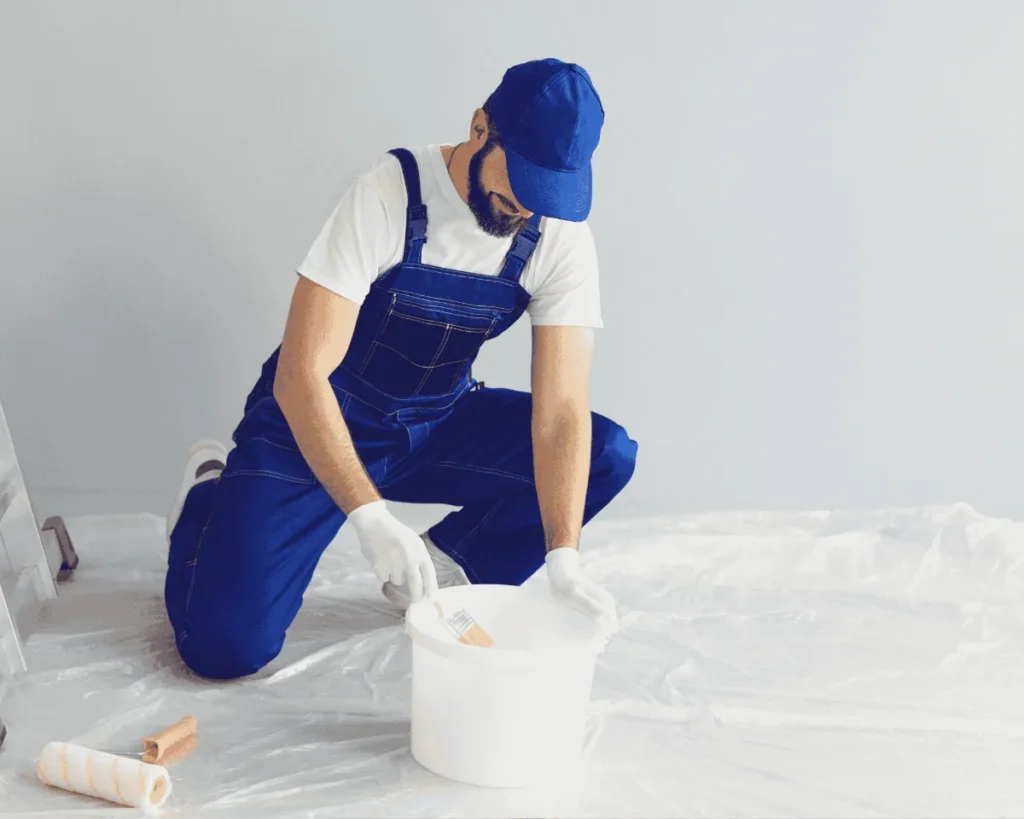
Quick answer: a sealer is a first coat that goes on before the topcoat. It binds a porous, patched or chalky surface, evens out how much paint the wall absorbs and helps the topcoat stick, which reduces peeling and patchy colour. You need it on new plaster or skim coat, repaired cracks, chalky old paint and walls with stains or past damp. On a sound wall that was painted before and is still in good condition, you can usually skip it. In our HDB packages, adding a sealer costs +$40 per room or $140 to $340 for the whole house (see our painting price list).
Does your wall need a sealer? Quick checklist
| Wall condition | Sealer needed? |
|---|---|
| New plaster or skim coat | Yes |
| Patched cracks or filled holes | Yes, at least on the repaired areas |
| Chalky old paint (leaves powder on your finger) | Yes |
| Water stains, past leaks, smoke or oil marks | Yes, a stain-blocking sealer |
| Sound, previously painted wall in good condition | Usually not |
What a sealer actually does
- Binds the surface: it locks down dusty, chalky or powdery surfaces so the topcoat has something firm to grip.
- Evens out absorption: new plaster, skim coat and filler soak up paint unevenly; a sealer stops patchy, blotchy colour.
- Blocks stains: a stain-blocking sealer stops old water marks, smoke and oil from bleeding through the new paint.
Sealer vs primer vs undercoat
| What it is for | Typical use | |
|---|---|---|
| Sealer | Seals porous or chalky masonry so paint absorbs evenly and sticks | Plastered and concrete walls, patches, chalky old paint, stains |
| Primer | Helps paint stick to bare or difficult surfaces | Bare wood, metal, glossy old paint |
| Undercoat | Builds an even, opaque base under the topcoat | Wood and metal, or a big colour change |
On HDB and condo walls, the product you need is usually a wall sealer. Primers and undercoats matter more for doors, gates and metal.
How to apply a sealer
- Clean the wall and scrape off any loose or peeling paint (see why paint peels).
- Fill cracks and holes, then sand them smooth. Large uneven areas may need a skim coat.
- Apply one thin, even coat of sealer with a roller or brush.
- Let it dry for the time printed on the tin.
- Finish with 2 coats of your topcoat.
Which sealer for stains and damp?
For most indoor walls, a water-based wall sealer is enough. For water stains, smoke or oil marks, use a stain-blocking sealer so the marks don’t show through. On walls that had damp or mould, fix the source and let the wall dry fully first, then seal and finish with an anti-mould paint.
What it costs with us
In our HDB packages, a sealer adds +$40 per room, or $140 to $340 for the whole flat depending on its size. See the full painting price list, or WhatsApp us photos of your walls and we will tell you whether you need it.
Frequently asked questions
Is a sealer the same as a primer?
Not quite. A sealer seals porous or chalky wall surfaces; a primer helps paint stick to bare or difficult surfaces such as wood, metal or gloss paint. On plastered walls, a sealer does the job.
Do I need a sealer for a new flat?
If the walls are bare new plaster or skim coat, yes. If they already have a sound coat of paint, you usually only need sealer on patched or stained areas.
How many coats of sealer do I need?
Usually one thin coat. Very porous or patched surfaces sometimes need a second; follow the label.
Can I skip the sealer to save money?
On a sound, previously painted wall, often yes. On patched, chalky or new surfaces, skipping it is a common reason paint looks patchy or peels early.
Need your home painted?
WhatsApp us your flat type and which rooms you want painted, and we'll send you a fixed quote.